Treehold cycle 3

Review cycle 3 · now with a playable prototype

Treehold

A top-down co-op sloth ARPG. Build your hold in the shade of a giant tree. Step outside, and the world is in a hurry.

Vote as you scroll Cycles 1 and 2 are baked in. Play the prototype, then answer five new questions.

How this works

We keep going round until it is ready to build

Each cycle: you vote and leave notes, the answers get baked into the design, and the next cycle asks new questions with new art. When nothing is left open and the group says go, the whole thing becomes one prompt for a build agent. Not before.

  1. 1

    Cycle 1

    The first pitch. 12 questions. 10 decided, 2 tied.

    6 to 7 Oct
  2. 2

    Cycle 2

    Renamed Treehold. A top-down world. 11 questions, 9 decided.

    7 to 8 Oct
  3. 3

    Cycle 3

    A playable prototype. 5 new questions. You are here.

    now
  4. ✓

    Dispatch

    The design becomes a build prompt and an agent builds the first playable step.

    when you say go

What changed in cycle 3

  • A prototype you can play. Built in a real game engine (Godot). Gather, build walls and towers, defend the tree, fight, run a dungeon. Play it below.
  • No visible grid. Aaron: keep the grid on the backend. Building still snaps to squares, but you only see a highlight while placing.
  • A big open Hold. Isaac: building needs open space so art does not clash or stack. Nothing wild grows inside the shade now.
  • Every spec has its own identity. Aaron asked what separates Blademaster, Berserker and Duelist. Answered for all 24.
  • Loot rule from Isaac's note. Random affixes on normal drops; heirlooms and sets never roll.

Locked in cycles 1 and 2

What you already decided

Not on the ballot again. Cycle 1 votes from Aaron and Andrew; cycle 2 from Aaron and Isaac. Not voted yet? Your vote counts from this cycle on.

  • NameTreehold2 of 2
  • ClassesParagon classes2 of 2
  • At launchAll 8 classes2 of 2
  • BuildingFree-build anywhere2 of 2
  • ResidentsInvite specialist sloths2 of 2
  • CraftingPleasantly silly2 of 2
  • DungeonsBoth: lairs and instances2 of 2
  • Second biomeThe Hurry River2 of 2
  • ServerPause when empty2 of 2
  • ArtPainted cute2 of 2
  • CameraThree-quarter top-downcycle 2, 2 of 2
  • HomeGround ring plus canopy deckscycle 2, 2 of 2
  • Danger at homeOnly if you provoke a laircycle 2, 2 of 2
  • ExpansionSaplings and long walls, bothcycle 2, 2 of 2
  • SpecsPick at 5, capstone at 15cycle 2, 2 of 2
  • Dungeon party2 to 4cycle 2, 2 of 2
  • WorldHandmade landmarks, procedural betweencycle 2, Aaron
  • GridUnder the hood, not drawnAaron's note
  • Next stepA tiny prototype firstdone: play it below
  • LootTied: random vs hand-madeIsaac's rule, confirm below

"Classes should definitely include 2 tanks, 2 healers, and 4 dps initially with specs that can maybe branch into some secondary roles. You also want classes that feel distinct and different in how they play, progress in the world. Additionally, you may want unique and tiered items (ie boss drops a legendary spear that has a unique equip effect or you find/craft this cool armor with a set bonus)."

Aaron. Answered in Classes and Loot.

"Character art is great. Close up area art doesn't look great. The tree looks great. If we are going to build, we need a bigger open space so art doesn't clash and stack weird."

Isaac. The Hold is now a big open clearing; nothing wild grows in it.

"When we specified a 'grid system' it actually made a visible grid... I think it would be fine to work with it on the backend though."

Aaron. The grid is now invisible; building still snaps to it.

"Usually only set and unique items have permanent stats. Set items should not be random, and if heirlooms are considered unique then they shouldn't be random either."

Isaac. That is the loot rule now; Aaron's grind caution keeps the affixes light.

Playtest build

Play The First Hurry

A 30 minute session for 1 to 4 sloths, online, in a real game engine (Godot). Open the link, type your name, pick a sloth, and you land under the tree with whoever else is on. Old Bramble tells you what to do next. Play it tonight, or together at the session.

Two bots play The First Hurry online, recorded from the engine and sped up: gather, build the Hold, the hurry wave, the Junkyard Boss, the Hollow Roots and the Dam Boss.

Play it in your browser About 15 MB. Desktop browser with a mouse. "Play together" joins the shared server; "Play alone" runs it on your own machine.

See something wrong? Press F8 or click the beetle in the corner. Pick Bug, Idea, Confusing or Love it, type one line, Send. A screenshot goes with it.

Wake up and gather

Warm up at the stump, then step out of the shade for leaves, twigs and stone. Hornet scouts and raccoons jump you out there.

Build and hold

B for build mode. Drag a ring of log walls, a gate, acorn towers, a lantern and a leaf press. Then the hornets come for the tree.

Junkyard and Hollow Roots

Beat the Junkyard Boss for the Root Key, then take the whole party down to the Dam Boss. Everyone gets an heirloom.

Keys: WASD move, mouse aim, left click attack, right click / 1 / 2 / 3 abilities, Space dodge, E talk or interact, B build (1 to 6 or scroll to pick, drag to place), Tab map, Enter chat, Esc menu, F8 bug. Gamepads work too. Four sloths: Bough Knight (tank), Mossbinder (healer), Drowsy Wizard (ranged), Night Creeper (melee).

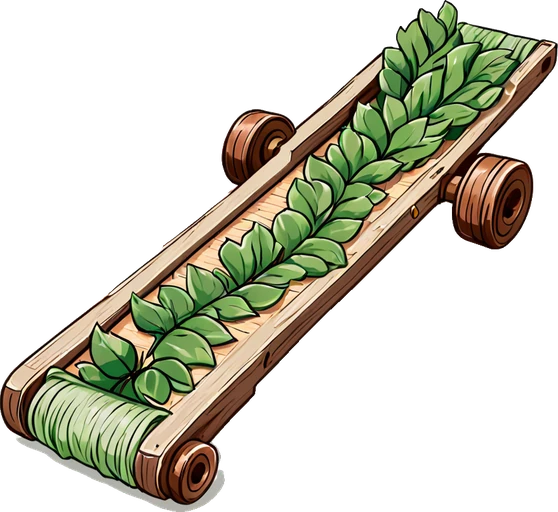
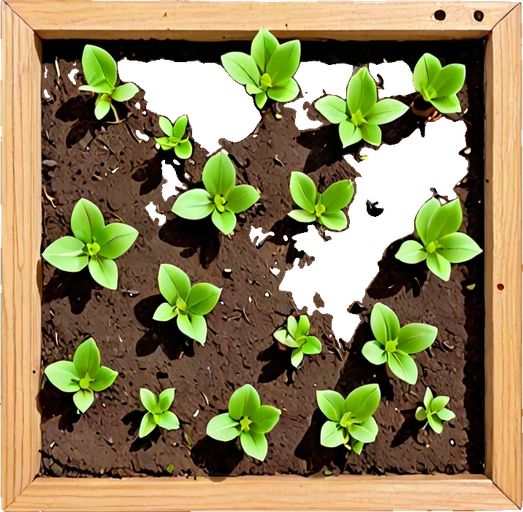
An outpost on the grid: a sapling, a plank pad, a press, a vine belt running home.

The pitch

The shade is home. Everything else is in a hurry.

A top-down co-op survival ARPG on one big grid world. A colony of sloths lives in the shade of a giant tree. Under its canopy is the Hold: the only safe ground there is, and you build it yourself, tile by tile. Floors, hammocks, gardens, leaf presses, kilns, vine belts carrying leaves from machine to machine.

Step out of the shade and the world wants to hurt you: caffeinated hornets, raccoons, things with red eyes. Pick a class and a spec, go out, gather, fight, find lairs and dungeons, carry it all home.

One shared, persistent world. When nobody is online, the world naps.

The world

One world, one grid

No base screen and no level select. The tree, your machines, the woods, the lairs and the dungeon doors all sit on the same tiles, at the same scale. You walk from your kiln into the forest without a loading screen.

The grid is real but hidden (Aaron, cycle 2): every square has a ground type, and trees, rocks, bushes and machines take whole squares. Tap Show grid to peek under the hood.
  • Everything built snaps to the grid. Floors, walls, machines, belts, crops, resource nodes.
  • Sloths and creatures do not. They move freely over it, so fights feel like an ARPG, not a board game.
  • Night is worse. More creatures, nastier ones. Lanterns push it back inside the Hold.

Home

What does a sloth home look like from above?

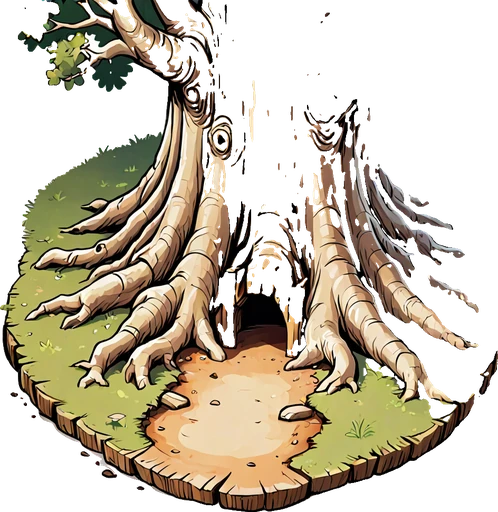
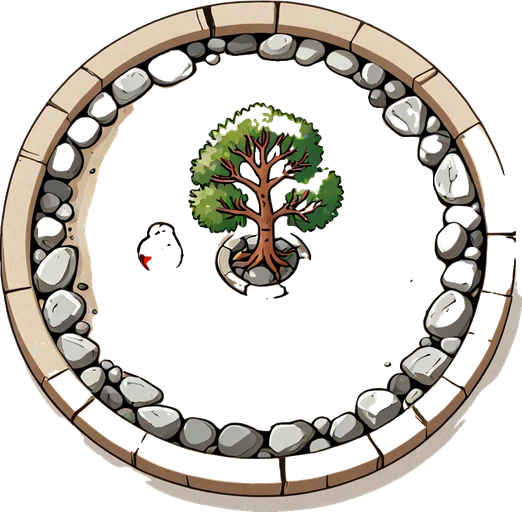
A tree is tall and the camera looks down, so here is the idea: the Hold is the tree's shade. The canopy casts a circle of shade, and every tile in it is safe ground you can build on. The trunk in the middle is the heart: respawn, the shared stash, and where you feed the tree. Feed it and the canopy widens: more shade, more room. The tree from above is the progress bar.

When you walk under the canopy, the leaves fade out around your sloth so you can see your base. Four ways it could look. A is drawn as a real tilemap; B to D are still mood paintings, and whichever wins gets built as tiles next cycle.

  • A. Shade ringBuild on the ground under the canopy. One layer. Simplest to read.
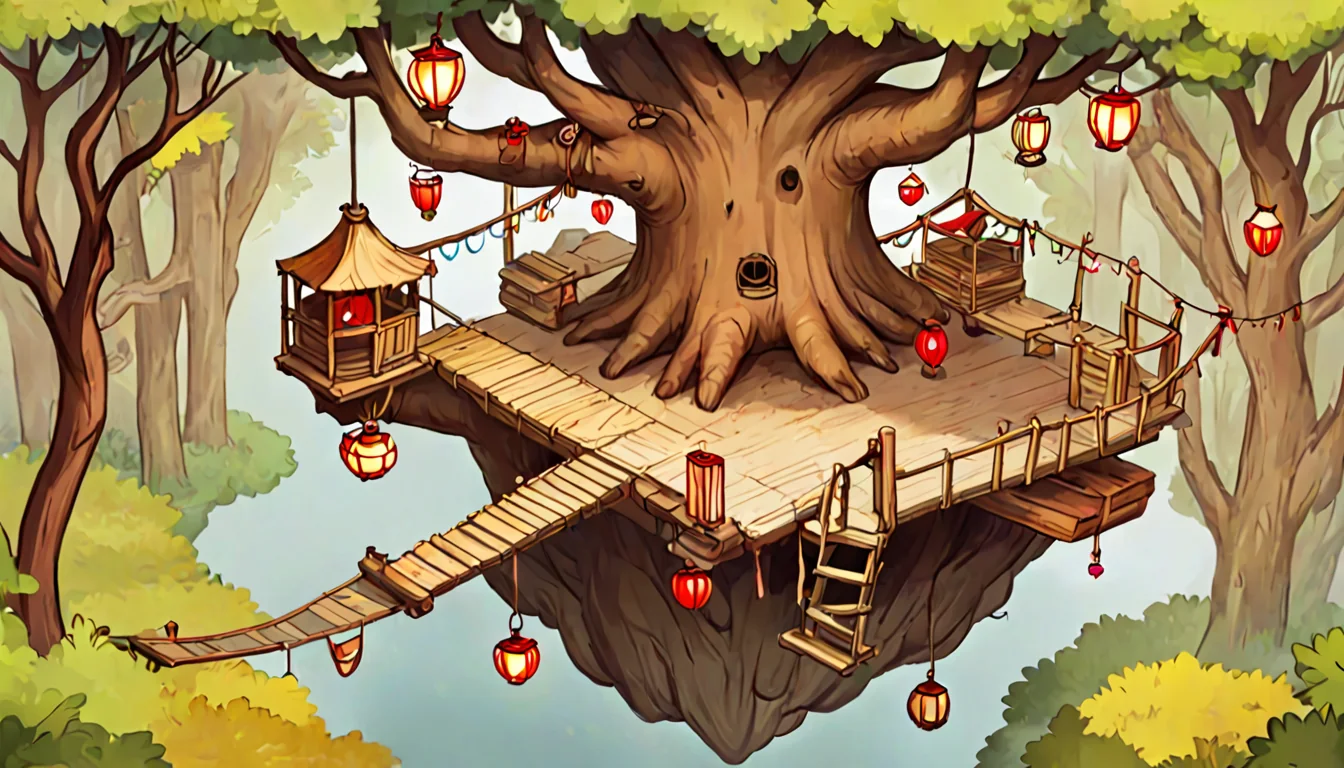
  • Wooden plank platforms across giant branches, linked by rope bridges, high above a misty forest floorMood painting, not the game view
    B. Ring plus canopy decksThe ground ring, plus a second build layer up in the branches, reached by ladders. Hammocks and the lookout live up there.
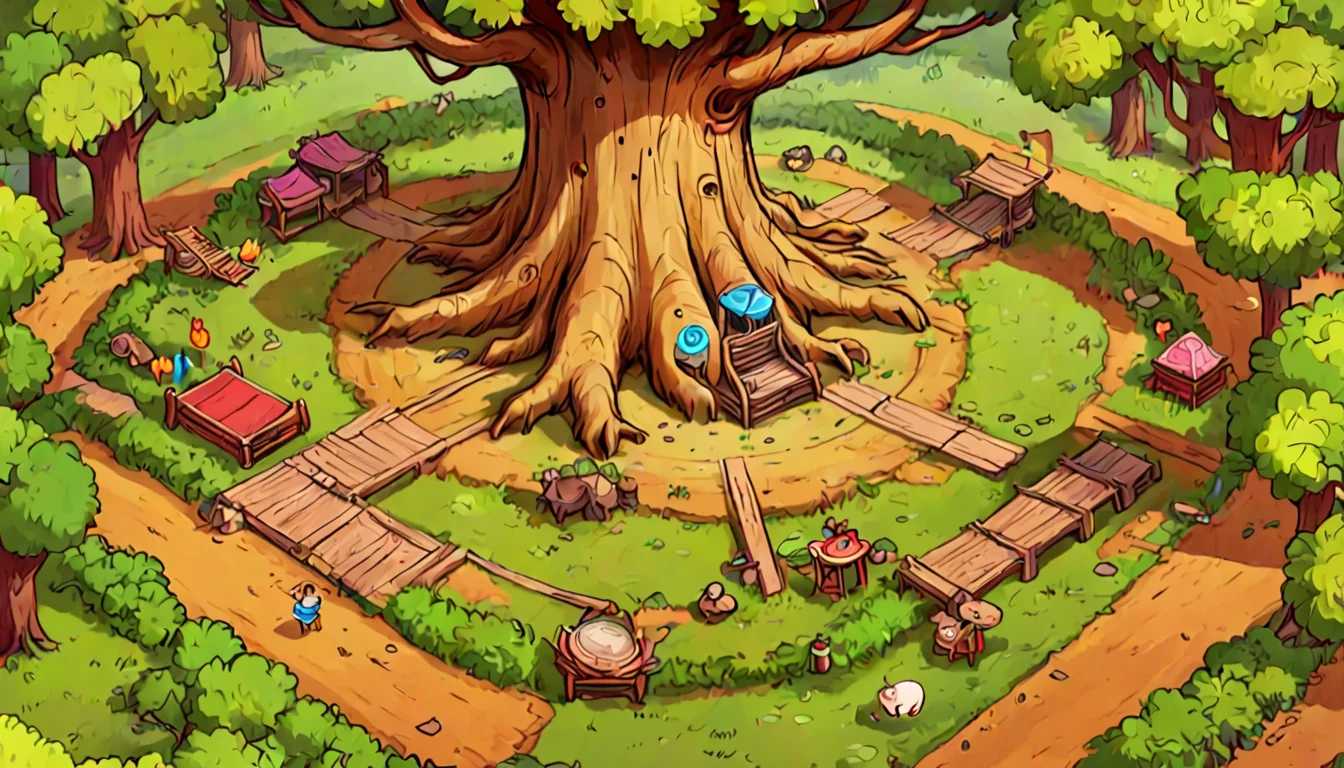
  • A giant tree trunk in a clearing, huge roots spreading out, a small village of fences and workbenches between the rootsMood painting, not the game view
    C. Between the rootsBuild in the pockets between giant roots. The roots are natural walls and paths.
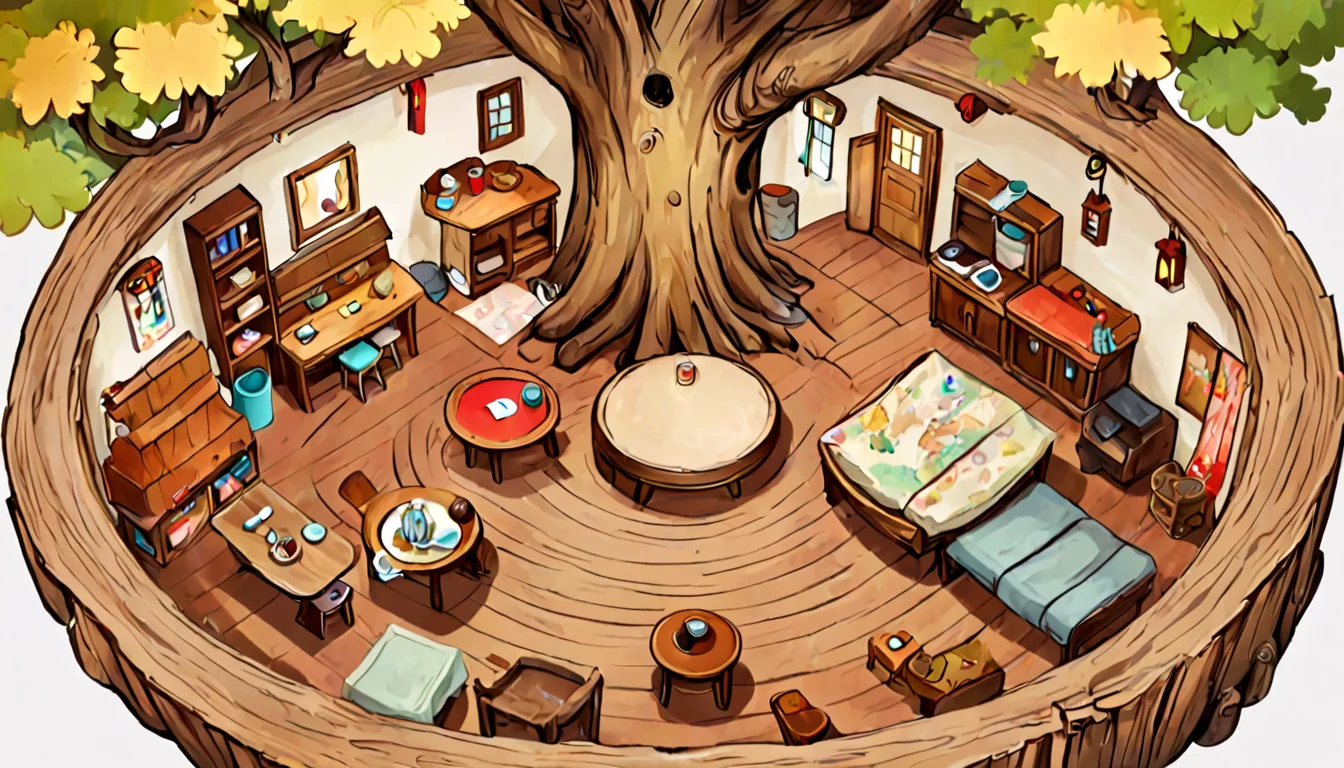
  • A round room inside a hollow tree trunk seen from above with the roof removed: hammocks, shelves, crafting tablesMood painting, not the game view
    D. Inside the trunkStep through the door into a floor plan inside the trunk. Cozy, but a separate space.

Residents

Decided: specialist sloths you meet in the wild move in. Each wants a spot and a thing. The botanist wants a garden. The smith wants a kiln nearby. The players' village, built by you. No NPC towns.

Building outside the shade

Allowed (you voted free-build anywhere), but not safe. A wall or a belt out in the wild can get chewed. Inside the shade, nothing is ever damaged.

Which camera?

Every tile scene on this page is three-quarter top-down: the ground is flat from straight above, and trees, machines and sloths stand up at one fixed angle so you see their fronts (Stardew, Pokemon, and Factorio's buildings work this way). The other choice is straight down (RimWorld): a cleaner grid, but every sloth is the top of a head. The research behind this cycle recommends three-quarter.

Decided in cycle 2: B, a ground ring plus canopy decks, and the three-quarter camera. The prototype has the ground ring and a deck strip under the tree.

Outside the shade

Step out, and you are prey

You are a sloth. Everything out there is faster than you. Creatures roam by biome and by time of day, guard the good resource nodes, and live in lairs. Leaving the tree is the ARPG: roles, abilities, gear, and knowing when to walk home.
A lair on the grid: the nest takes 4 × 4 squares; the hornets do not stay on squares.
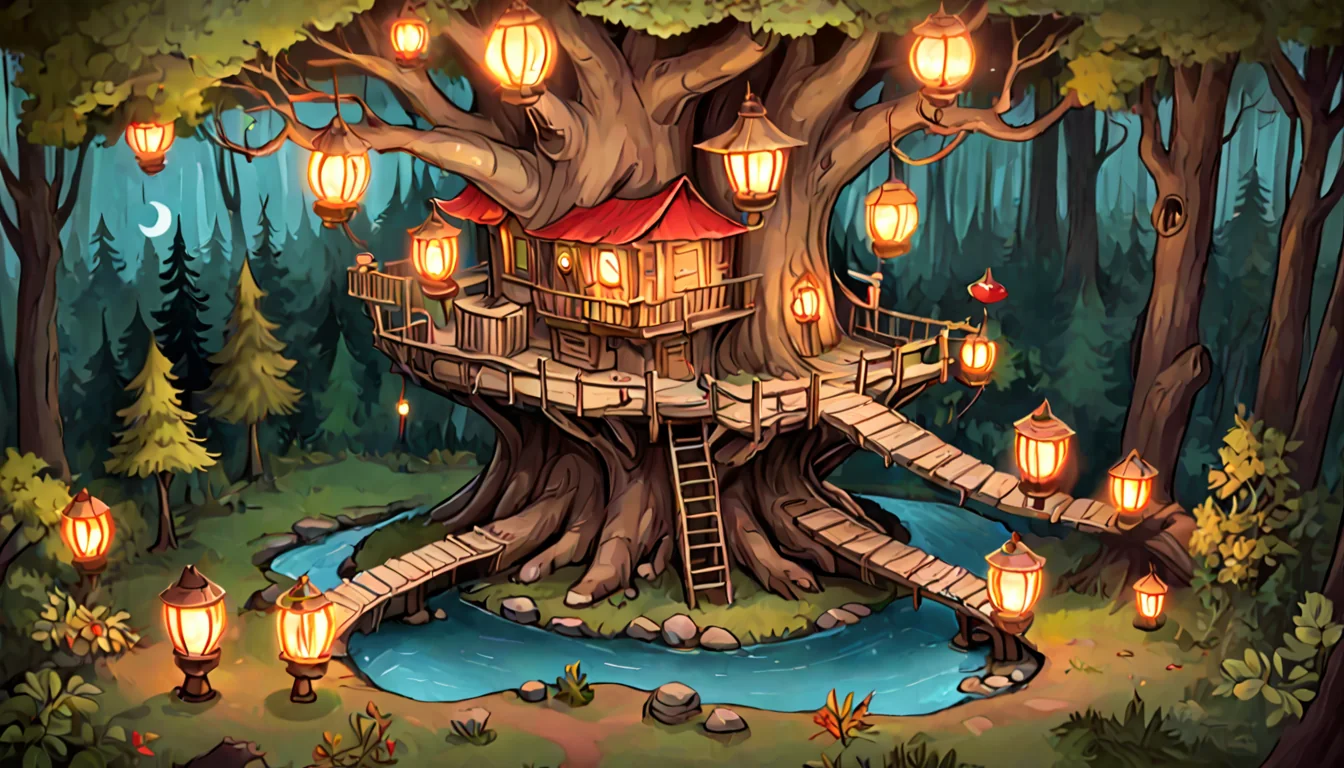
A lantern-lit treehouse base at night in a dark forest full of red eyesMood painting, not the game view
Night: the feeling we are after. Night on the tile map needs its own light and shadow art.
  • Die out there and you wake up in your hammock. Your pack waits where you fell. No rush, but not forever.
  • Nobody online? Nothing happens to anything. That is decided.
  • While you are online, does the wild ever come to your door? That is the question below.
Decided in cycle 2: danger only comes home if you provoke a lair (the prototype's hornet nest does exactly this), and the base grows both ways: saplings for outposts and long walls.

The loop

One trip, about a minute

1

Leave the shade

with a goal: leaves for the press, sap for the kiln, a dungeon key.

2

Gather and fight

Nodes drop resources. Enemies drop parts. Both go in the pack.

3

Pack full

or health low, or night falling. Time to head back.

4

Walk home

or ride a vine line, once you have strung one.

5

Build

Dump the pack on a belt, place a machine, feed the tree, pick a talent.

Leaf Lump of amber sap An angry hornet with a tiny spear A candied leaf

Minute

Out of the shade, gather, fight, carry back.

Hour

Place a machine. Lay a belt. Clear a lair. Run a dungeon.

Week

The canopy widens. The party gains specs and gear. The map gains a region.

Classes

Two tanks, two healers, four damage

Decided: paragon classes, all eight at launch. Aaron's note shaped the roster: two of each support role, four damage, and every class has one spec that leans into a second role. Each class also plays differently out in the world, not only in fights.

Tanks

Sloth in bark armour with a shield
Bough KnightWarden · Blademaster · Berserker (damage)Out in the world: carries more.
Grey sloth (stand-in for the Nap Monk)
Nap MonkStillwater (dodge tank) · Dream Fist · Hundred Palms (damage)Out in the world: rolls past danger.

Healers

Sloth gardener with a watering can
MossbinderGrovekeeper · Beastcaller · Thornbinder (damage)Out in the world: nodes grow back faster.
Cream sloth (stand-in for the Bard)
BardLullabist (heals over time) · Drummer · Heckler (off-tank)Out in the world: songs calm creatures.

Damage

Lavender sloth mage with a moon lantern
Drowsy WizardElementalist · Stormcaller · Dreamweaver (control)Out in the world: lights the dark.
Sloth in a leaf hood (stand-in for the Night Creeper)
Night CreeperShadow · Poisoner · Duelist (off-tank)Out in the world: not seen until close.
Sloth in goggles (stand-in for the Ranger)
RangerMarksman · Hawkmaster · Trapper (support)Out in the world: sees farther on the map.
Dark sloth with red eyes (stand-in for the Lichen Lich)
Lichen LichRotkeeper · Gravecaller · Plaguebearer (off-heal)Out in the world: creatures avoid the rot.

Sloth art is cycle-1 concept from the generator. Four are stand-ins until each class gets its own portrait in a later cycle.

Talents change how an ability works

Each spec has a small tree, three rows of three, filled from levelling. Talents change what a spell does, not just a number. Stats come from gear and levels.

When do you pick the spec? Cycle 1 tied between 5 and 15. A middle path: pick your spec at 5, unlock its capstone at 15. Early identity, a late payoff.

Row 1
Row 2
Capstone

What makes each spec different

Aaron asked: what separates a Blademaster from a Berserker or a Duelist, and are Stillwater and Dream Fist both dodge tanks? Each spec now has one verb that defines it.

Bough KnightWarden Hold: shield up, blocks the front, tauntsBlademaster Bleed: two blades stack bleeds on one targetBerserker Rage: fills when hit, huge cleaves, heals on damage
Nap MonkStillwater Dodge: perfect-timed dodges negate and counterDream Fist Stop: stuns and sleeps so enemies never swingHundred Palms Combo: chain hits, spend on finishers
MossbinderGrovekeeper Mend: direct heals and bark shieldsBeastcaller Command: a pet heals and body-blocksThornbinder Smite: your damage heals allies near the target
BardLullabist Aura: songs heal everyone near youDrummer Tempo: party speed and attack-rate buffsHeckler Taunt: insults pull enemies, shrink their damage
Drowsy WizardElementalist Switch: fire, frost or lightning per fightStormcaller Channel: stand still, delete a packDreamweaver Control: sleep and slow fields
Night CreeperShadow Ambush: stealth openers, burst from behindPoisoner Kite: traps and stacking poison at rangeDuelist Parry: parry and riposte one big enemy
RangerMarksman Snipe: long charged shots and critsHawkmaster Mark: a hawk scouts and marks targetsTrapper Zone: snares, traps, disarms dungeon traps
Lichen LichRotkeeper Curse: the whole party hits harderGravecaller Army: skeleton sloths fight for youPlaguebearer Spread: sickness jumps; drains heal the party

So Blademaster, Berserker and Duelist are bleed vs rage vs parry. Stillwater avoids damage by timing; Dream Fist prevents it by disabling. Specs pick at level 5, capstone at 15 (decided).

Loot

Tiers, heirlooms and sets

From Aaron's note. Four tiers, colour-coded everywhere. The top tier is heirlooms: named, hand-made items whose effect changes how you play, each from one boss or one long crafting chain. And sets: matching pieces with bonuses at 2 and 4.

  • Carved acorn ringCommonAcorn ring
  • Bark helmet with moss trimFineBark Warden helm
  • Staff topped with a crescent moon crystalRareSleepy Moon staff
  • Golden spear with a hornet stinger bladeHeirloomHornet Queen's Stinger

Heirloom: the Hornet Queen's Stinger

Drops from the boss of the hornet lair. Every third hit leaves a sleepy sting that slows the target. There is one of these per boss, and each changes how you play, not just your numbers.

Set: Bark Warden
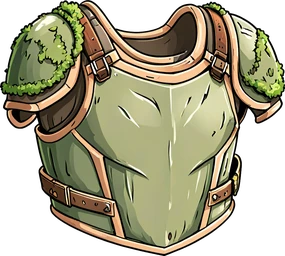
Bark helmetBark chestplate

2 pieces: more armour. 4 pieces: your taunt also heals you a little. Crafted from lair parts, so the tank grinds the hornet nest for it.

Resources and crafting

Pleasantly silly, on the grid

Decided: pleasantly silly. Machines sit on tiles; vine belts carry items between them. Every machine has an input, an output and a visible timer. Belts are earned at tier 1, not given.

  1. leavestier 0, by hand
  2. leaf presshand-cranked
  3. candied leaves+ sap, tier 1
  4. kettlehot water, patience
  5. leaf brewfuel, and tree food
  6. the treedrinks it, grows

Tiers 0 to 2

Leaves, twigs, acorns, moss, clay. Pressed and candied leaves, rope, planks. Amber, leaf brew, glass, moss paper.

Tier 3

Slow syrup (brew reduced for a whole day), silk cloth, potions: "wide awake", "thick fur".

Tier 4

Essence of nap, which the fast things fear. Heirloom crafts. Dungeon keys.

The building kit, seen from above
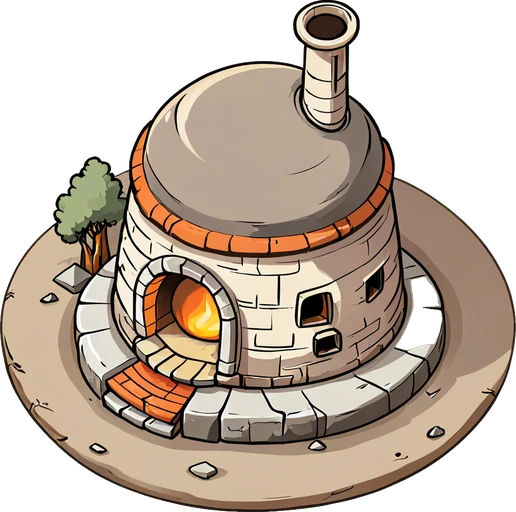
Leaf press
leaf press
Stone kiln
kiln
Vine belt
vine belt
Storage crate
crate
Garden bed
garden
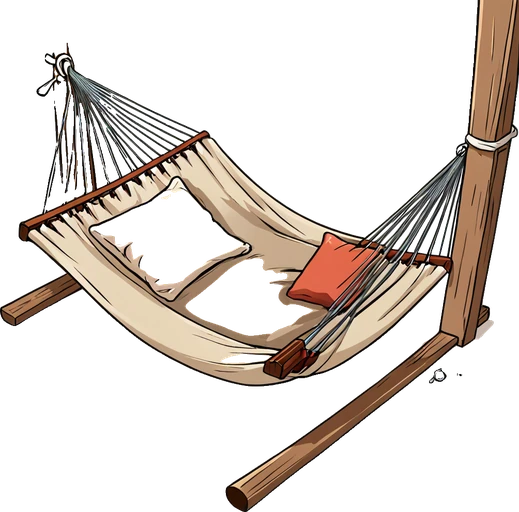
Hammock
hammock
Log wall
wall
Lantern
lantern
Sapling
sapling

Lairs and dungeons

Open lairs on the map. Instanced dungeons behind doors.

Decided: both.

Open lairs

On the world map, visible from outside: a hornet nest, a raccoon junkyard. Anyone nearby can walk in, no loading. They respawn on a timer and drop parts, rares and keys. Fine for one or two careful sloths.

Instanced dungeons

A door on the map: a cave mouth, a sunken hatch. Going in loads a private copy for your party: rooms, a boss, a shot at an heirloom. They want the roles. Clearing one calms the region above it for a while.

Inside an instance: stone floor squares, crystals, a chest, two raccoons in the way.
Decided in cycle 2: instanced dungeons take a party of 2 to 4.

The tile world

Squares, not a painting

These are tilemaps. The page builds them live from a grid: every square has a ground type, every building and tree takes up whole squares, and taller things lean over the squares behind them. The ground textures, trees, machines and sloths are all generated art. Tap Show grid to see the squares.

Build mode · in the shade, safe
Kiln, 2 × 2. 40 clay, 20 twigs.
The Hold, build mode. 24 × 13 tiles at 64 px. The dashed square is a kiln about to be placed on a 2 × 2 footprint. Right edge: outside the shade.

What this first pass does not do yet

  • Sloths face one way. The generator would not draw back or side views. Walking in four directions comes from cutting each sloth into parts and animating them (how Don't Starve does it). That is the next art step.
  • Ground edges are soft blends of the generated textures. The build swaps this for a set of generated edge shapes, so even the edges are art, not maths. Your call on whether the blend is fine for now.
  • No shadows or night yet. Those need their own generated shadow sprites.
  • Machines were made for the cycle-2 pages, not yet redrawn from one fixed camera. The build makes every building from one 3D block-out so they all match the grid angle exactly.

Scope v1

Three steps, each playable before the next

  1. 1

    Playable

    Dawdlewood on the grid. The tree and its shade. Free-build with tier 0 to 2 machines and vine belts. All eight classes with specs and talents. Loot tiers, one heirloom, one set. One open lair, one instanced dungeon. Persistent server that naps when empty.

  2. 2

    Deeper

    The Hurry River. Residents. Tier 3. The river lair and the sunken dungeon. Outposts, if voted. Pets and outfits. More heirlooms and sets.

  3. 3

    Wider

    Canyon, Ridge, the Glow Below. Tier 4. The rest of the dungeons.

Bots play each step before people do.

Not in v1

PvP. Player trading. Mod support. 3D anything. Pixel art. Art drawn in code.

What happens next

Ready to build, or another round?

Your votes write the build prompt. When this cycle settles, the answers move to "decided" and cycle 3 asks whatever is still fuzzy, with new art. This keeps going until it is ready to hand to a build agent. That happens only when nothing is left open and this poll says go.

Anything else

Ideas, worries, a creature you want in it, art you love or hate. Short is fine.